On 18 December 2012, Lise Davidsen made her professional opera debut at the Royal Danish Opera in a production of The Cunning Little Vixen. Davidsen was sharing the role of the Dog and the Owl with the Norwegian mezzo Tuva Semmingsen. The director was Francisco Negrin, the designer Es Devlin and the conductor Thomas Søndergård.
I saw the show on 12 January 2013, the ninth of fourteen in the run, and one of the four in which Davidsen sang. I reviewed the production for Opera magazine. Reading the review back, Davidsen isn’t mentioned. All I can find in my scribbled notes from the night is a scrawl resembling ‘Davidsen dog = strong, full!’
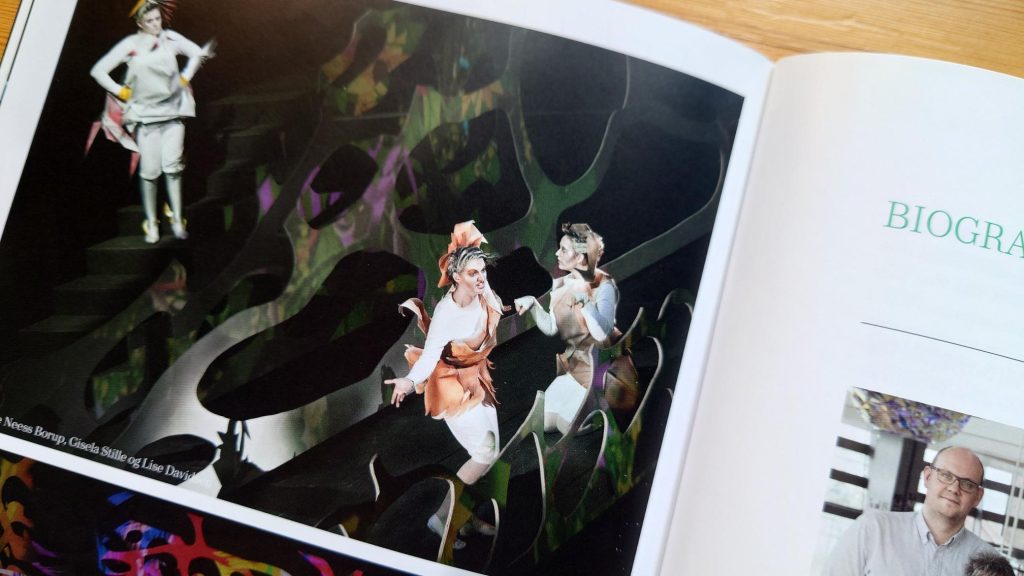
Davidsen won the Operalia competition shortly after I moved to Copenhagen in 2015. Except, she hadn’t ‘won’ in the way people win Operalia now. She had impressed on a significant number of operatically significant people that she was the world singer to watch – destined not just for stardom, but potentially for greatness.
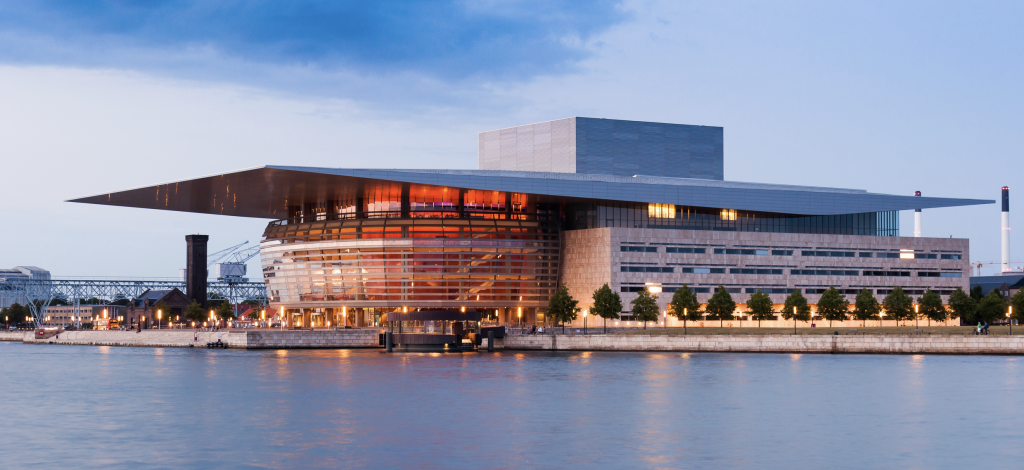
Davidsen remained in Copenhagen for much of the decade after finishing at the Royal Danish Opera Academy (her appearance in Vixen was equivalent to the final module in her degree) but did not appear at the Royal Danish Opera after winning Operalia. When she sings her first Lady Macbeth here on Friday (15 May), it will constitute her first appearance on the stage of the Copenhagen Opera House for some twelve years.
When I was first sent to interview Davidsen, by Opera Now in July 2016, we sat at a low table in the dingy foyer of the Royal Danish Academy of Music as a steady stream of students and staff walked past. For the next interview in February 2019, to write the booklet note for her debut recording for Decca, she suggested we meet at the shabby-chic café in Østerbro underneath the building where she’d just bought an apartment. On her mind was how terrified (and cold) she had been at her Bayreuth audition the previous year.
There was a hesitance, a vulnerability about Davidsen back then – and a certain openness about those elements of her persona – that she has managed to effectively channel into a sort of ‘aura’. When she sang the role of Sieglinde in a concert performance of Act I of Die Walküre with the DR Symphony Orchestra and Fabio Luisi in 2020, she was still walking onto concert platforms with a degree of trepidation that you could see – the girl from Stokke, somehow ending up on this stage, slightly unbelieving. By the time of her orchestral recital at Tivoli in 2023, that had been replaced with a poise and confidence I would describe as aristocratic. It has been quite the transformation, and Davidsen has to take credit for enacting it while remaining, fundamentally, herself.
Davidsen’s disappearance from the Royal Danish Opera – particularly in that first decade after Operalia, while she was still living in Copenhagen – is something I think about a lot. At the time, she did too, though she has understandably moved on.
In the 2016 interview, Davidsen opened-up about feeling ‘not wanted’ by the Royal Danish Theatre’s then Artistic Director of Opera, Sven Müller. There were roles that would have fitted her perfectly, most obviously Senta. They were handed to other singers – in some cases salaried company members, so the motivation might have been procedural. One exchange in our interview in 2016 went like this (from the transcript):
I wonder why you aren’t being cast here…
I wonder why as well! I just believe they don’t appreciate it or they have singers, I don’t know…
Well, they don’t have singers of your voice type – and certainly of your age…
No, they don’t. And of course I ask myself why. But I can’t…but it’s just weird, I felt so at home when I studied there [Royal Opera Academy] because you work in the building and you’re there all the time.
All I have now is the transcript, but knowing the sotto voce with which Davidsen speaks, I read a degree of anger into her statement, slightly later, that ‘I don’t want to be in a place where I am not welcome’ (we were, astonishingly, speaking in an enclosed public place full of music professionals, in small Copenhagen).
The conversation about her lack of bookings at the Royal Danish Opera went on and on, changing tack, lurching from optimism to sorrow, but always revolving around Sven Müller’s intransigence. At one point, Davidsen appeared to blame herself, suggesting she had not been forward enough. In that vein, she also hinted, quite cannily, that it could have been a communication problem: that because Müller knew her and had seen her train, there was no real opportunity for her to set out her stall to him on her own terms and explicitly state that she wanted to sing here. He would give her advice in the canteen, she said, as if he knew all there was to know about her voice, her journey. In retrospect, that can seem like some sort of power play.
There’s a well-worn story, which I admit to having only heard second-hand (but more than once) about Tina Kiberg falling sick on a day she was due to sing Elisabeth in Kasper Holten’s Tannhäuser at the Royal Danish Opera. Davidsen’s teacher Susanne Eken marched her student up to Müller’s office and told the boss, apparently, that her pupil was ready to sing the role that night and would do so with aplomb. Müller allegedly brushed Eken off, continuing to ring round agents to source available replacements.
Sven Müller left Copenhagen in 2017, before the expiration of his contract. It’s difficult to find people on the opera scene here who have particularly kind words to say about his tenure. I may have been overly generous in my summation of it – I certainly lacked insight back then – but at least Müller steadied the ship effectively after the major storm of Keith Warner and Jakub Hrůša’s double resignation. He delivered some striking productions (and yes, some turkeys).
The Royal Danish Opera is a very different company now – more open, more optimistic and far more popular, domestically if not internationally. Kasper Holten’s leadership as CEO of the parent Royal Danish Theatre has been as transformative as his previous tenure at the opera company had been (perhaps even more so).
Davidsen has long since reached the status of having little to prove; having experienced the total psychological transformation of parenthood recently, she surely now has even less. Every time I have spoken to her since the hiatus of the pandemic, she has seemed more at ease in her own skin – not different, just more able to access those inner characteristics that have probably always made her, her (among them is a rootedness and patience, micro and macro, for which you have to search hard in any walk of life, let alone a theatrical one). She has evidently allowed herself to think warmly of Copenhagen again, and has found a way of returning with sincerity and meaning to a company that could never afford to right the wrongs of the past by casting her in a staged production. I am eager to hear her in the theatre on Holmen again, and will continue to wrack my brain for memories of her debut in 2013 – a historic night, if only in retrospect.