Categories
Uncategorized

First Icelandic School

The BBC’s Total Immersion: Icelandic Chill on 22 February 2026 was illuminating and joyous. It was a real privilege to talk all day on Icelandic music – and even more, to do so with Icelandic musicians.

The phrase ‘First Icelandic School’ came up quite a lot over the course of the day, beginning with my talk in the morning. I was asked if I coined this phrase. Yes, I did.

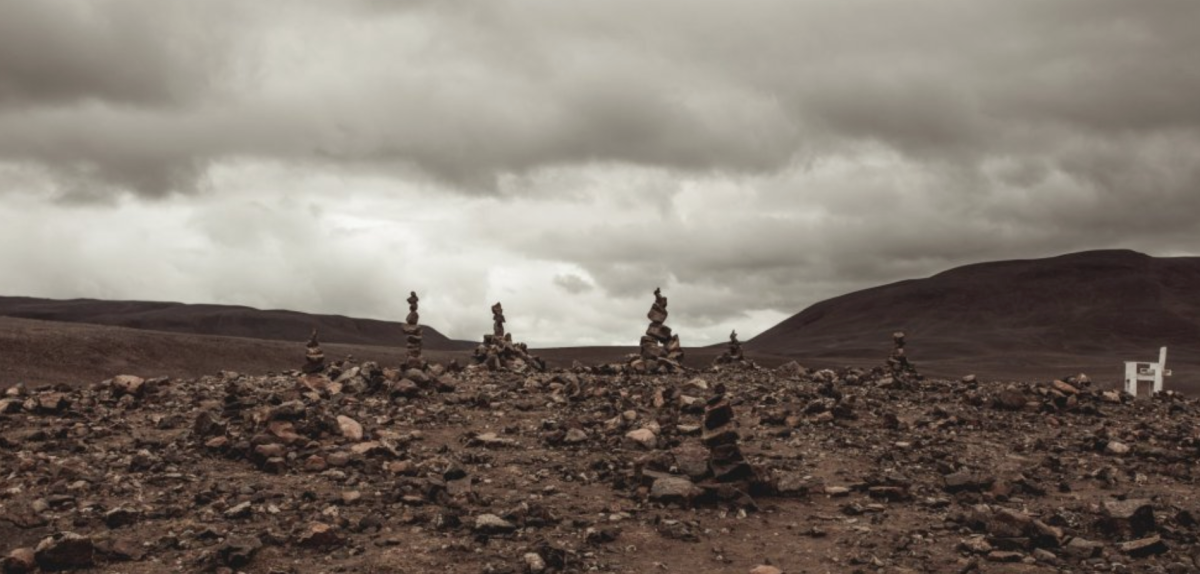
To paraphrase the event’s programme notes, I would designate the First Icelandic School as a generation of Icelandic (or Iceland-resident) composers who have emerged mostly since the turn of the millennium whose music sounds different but taps into various unifying characteristics and is arguably influenced, consciously or otherwise, by Iceland’s distinct topography.

The characteristics I refer to include generally slow speeds, use of drones and pedal notes and a preference for instrumental or electronic rendering. With regard to orchestration, I would identify as a First Icelandic School trait a vaporous and almost spectral treatment of the acoustic symphony orchestra that can either cleave to low tessituras, float with apparently anti-gravitational qualities, or appear to do both – either at the same time, or in the course of a single piece. I also tend to think of a certain breadth and space as central to music of the First Icelandic School, but this is something it has in common with Nordic music from Grieg onwards.

There are musicians I would associate with the ‘school’ whose music might only tap into a couple of those characteristics. But in typical Icelandic fashion, those characteristics – though finding a particualr fertile home in acoustic orchestral works by the likes of Anna Thorvaldsdottir – don’t seem to be bound by any genre in particular: Sigur Rós, Janus Rasmussen and Vök all display one or more of them in various forms as does some entirely-sampled music by Hildur Guðnadóttir. Daníel Bjarnason is a hub-like figure within the First Icelandic School but his music frequently shows none of those characteristics. There are non-Icelandic passport holders whom I would associate with the First Icelandic School (they do, however, live in Iceland).

Of course, there were Icelandic composers before there was the First Icelandic School. So how is the term valid? Well, you could argue that most Icelandic composers who came to maturity significantly before the turn of the millennium – Sigfus Einarsson, Jón Leifs, Hafliði Hallgrímsson, Björk (considering her pre-2000 work) – were either strongly influenced by external European models or were lone wolfs. (One exception here might be the strong links between the music of Leifs and Björk, despite them writing, ostensibly at least, in different genres).

The constituency that could be referred to as the First Icelandic School is perhaps even more united by outlook than its members are by the sound of their music (though that is a strong feature): most have been influenced by electronic and pop music; most have crossed genres; most have made significant creative use of the internet; most are women and an uncanny proportion started out playing low stringed instruments. Together, the First Icelandic School can be said to be the only nationally-representative group of ‘composers’ to have emerged after the millennium and to be significantly populated – perhaps even dominated – by women.

What are the precedents for the phrase? It doesn’t appear in my book The Northern Silence. I first used it in print in an article on the composer Daníel Bjarnason for Gramophone magazine. I used it shortly afterwards in a programme note for the Philharmonia Orchestra’s performance of a piece by María Huld Markan Sigfúsdóttir and have used it subsequently for a sleeve note to a new recording of music by Bjarnason. Following the BBC event at the weekend, it has been picked up by The Times and The Guardian newspapers.

Like any signifying phrase, it’s probably a little clumsy and is destined for misuse. Still, I think it’s helpful to a point, and would welcome opinions on its validity. And just who is a member of the First Icelandic School?

Categories
Uncategorized

Kentucky Fried Keflavík

In 2013, I had the chance to work in Iceland for the first time. The assignment was to interview the Finnish musician Osmo Vänskä, who was in Reykjavík to conduct the Iceland Symphony Orchestra. Lots happened on my brief visit, some of which is recounted in The Northern Silence. I met Lárus Jóhannesson for the first time, at his brilliant record shop 12 Tónar. I had my first taste of Harpa. And I ate a KFC at one of the most architecturally distinctive branches of the restaurant anywhere, situated near the airport in Keflavík. I wrote about the building for my now-defunct blog Moose Report, and re-publish it here.

While I’m at it: I write in The Northern Silence about Iceland’s societal intimacy and closeness – which comes with pros and cons (the pianist Víkingur Ólafsson is particularly eloquent on this in the book). Recently I was chatting to the Icelandic composer Bára Gisladóttir – who lives in Copenhagen and is also featured in the book – and mentioned the KFC in Keflavík. She told me that the franchise is owned by a relative of hers.

Another curious thing about that first trip: I landed in Iceland on 13 June. On my two subsequent visits to the country – unconnected work assignments – I would arrive on exactly the same date. I have gleaned a good sense of how western Iceland feels in midsummer.

PK Arkitektar’s KFC building, Keflavík, Iceland

Calm descends easily over Keflavík’s KFC. The high ceiling sucks up conversation. The west-end wall-window thrusts nature into a space built for its distortion. Like the raw Icelandic landscape outside, the cast-concrete walls urge you to pause and consider things bigger than chicken and chips. Bigger than yourself.

Kentucky Fried Chicken Iceland bestowed a new restaurant on the coastal settlement of Keflavík in 2005. The town is a satellite to the Icelandic capital, living off small-time maritime industry and the airport four clicks away. The franchise owners wanted the job done by Reykjavík firm PK Arkitektar. The chicken shifters got a stand-alone building that strives for a certain uncompromising beauty born of its distinct surroundings. 

From the side that faces the sea, it sits up, sharp – like a statement Grand Design or a new Nordic railway station. From the opposite side, it’s more unassuming, a sibling to the grander but equally angular office building that looms behind it, just by the sea shore. On the outside, the matt-black tiles refract that green-black solidified lava on which Iceland sits. Concealed partially within that tiled blackout are the entrances. You have to work hard to find them. Gotta earn that chicken.

The building has been described by one critic as ‘a play of boxes’. It’s not much of a game, more a satisfying exercise in positioning – one long shoebox with two protruding squat towers, knowingly spaced. On one tower the KFC logo is distilled down into its white initials, aligned classily top left. The grinning colonel is exiled to the other rump. On their own, white-on-black, with the dignity of a corner positioning, those letters take on a new status. Suddenly they have the weight and dignity of an organisation built on diligence and authority. KFC as KPMG.

Not for long. Inside there’s faux-wood, brown plastic and stencilled glass aplenty – all described by one journal as a ‘dialogue’ with the modernist sheen of the exterior structure. In reality it’s a compromise. McDonald’s can fill its eateries with Arne Jacobsen furniture without turning its customers off, so couldn’t KFC have strived for something better?

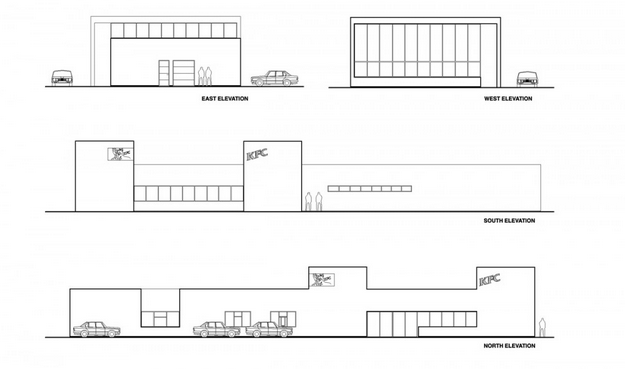
Side elevation

Like a metaphor for life, operational realities are flies in the ointment of PK’s aesthetic vision. On-site marketing promos sully the grey concrete and frosted glass. The children’s play structure seriously compromises the effect of that west window. These flaws are by their nature temporary. Maybe it’s the kids who get the last laugh, up on that multi-coloured plaything, getting a close and unusual perspective on a nifty piece of design that has Lego-like simplicity.

The room isn’t entirely ruined. Perhaps it’s the light play that changes the feel of it: the brightness and shadows from the high, deep strip window that runs from north to south above the counter and the opposing ketchup bar. The brutal Icelandic coastline tamed by the perpendicular windows in the main dining area.

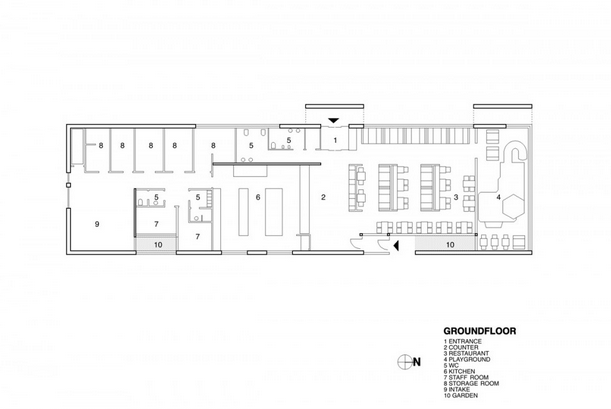
Floorplan

Joi is the broad, blonde twenty-something who sells me my chicken, chips and Pepsi from behind the counter fronted by a slab of frosted glass with more elegant KFC initialling, this one etched (it’s the only interior fitting that has real beauty). ‘I think people just come here for food, not to look at the architecture,’ he says, and acts with professional benevolence when I ask if someone from the restaurant might be able to order me a taxi. ‘But yeah, it’s a really cool building,’ he adds with a creeping smile. ‘Not all the KFCs in Iceland are like this. I think there are seven or eight. Maybe they’ve had the same big ideas about architecture in one or two of them, but not the others.’

You can’t deny the instant-hit of the food. It might not have the taste-depth of the super-good lamb I eat later in the day at Sólon on Bankstræti, but boy does that greasy bread-crumbed chicken hit a spot. (The chips have nothing on McDonalds’s, but you knew that.)

Try to spot Keflavík’s KFC from the airport road – or even from your plane (landing from the east at KEF, you might fly right over it) – and the chances are you won’t. It hunkers down among its neighbours, into the streets and into the black rock. That’s one aesthetic victory.  If the calm that infuses the space fills diners in parallel to their chicken, that’s another.